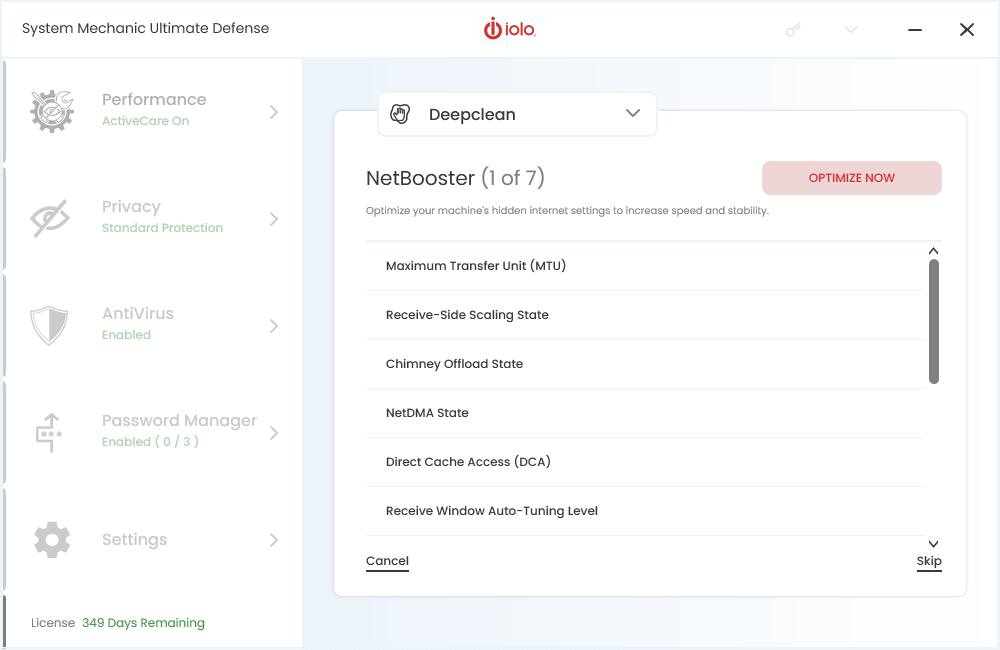
NetBooster makes it easy for you to reach maximum internet performance.
A slow or unstable internet connection can be just as frustrating as a slow PC. Pages take longer to load, downloads stall, and streaming or online gaming can become unreliable. While your internet service provider and network hardware play a role, Windows internet settings can also have a significant impact on how efficiently your connection is used.
Why Internet Settings Affect Performance
Windows relies on a variety of network settings to manage how data is sent and received. These settings control everything from packet handling and bandwidth usage to background network activity. Over time, default configurations, outdated settings, or software conflicts can prevent your system from making the most of your available connection.
In many cases, internet issues aren’t caused by your ISP at all. Inefficient network configurations, unnecessary background processes, or mismanaged system settings can slow down browsing and downloads even on fast connections. Adjusting these settings can help improve responsiveness and stability without changing your internet plan.
In the sections below, we’ll look at which Windows internet settings matter most and how optimizing them can help you get better performance from your existing connection.
The Importance of Optimized Interned Settings
There are a handful of Internet providers that supply loads of different devices. Since each device has different default setting, the same connection might vary in speed between each one of them. These variations can be huge, depending primarily on the level of Internet setting optimization.
If the settings aren’t optimized properly, even the best-performing routers might not be able to ensure the connection speed you’re looking for. For this reason, changing the focus from hardware to software is the way to go.
The most important settings that you need to change are related to TCP/IP.
What is TCP/IP?
TCP/IP is an acronym for Transmission Control Protocol/Internet Protocol. It’s a suite of communication protocols that connected devices utilize to communicate with one another.
The information that you share online doesn’t travel as a whole. Instead, TCP breaks it down into small pieces that travel separately. IP ensures that all of these pieces reach the right address. Essentially, TCP/IP dictates the way that your data is packaged and transferred.
Since Windows’ internet settings are predetermined, they don’t adjust according to the Internet connection. Any misalignment that occurs creates bottlenecks, which cause your connection to be slow. This means that what you have to do is ensure that your Internet settings match the connection speed. There are many ways that you can do this, but only some of them are both accessible and effective.
How to Optimize Internet Settings?
There are multiple ways of doing this and a lot of tools that you can choose from. Windows contains its own system that allows you to do this without the need for any 3rd party programs. Tech savvy people are able to access the registry or the command prompt and change these settings manually, but not many people know how to do this.
If you’re one of them, it’s probably best that you don’t mess with this yourself. There are many settings that shouldn’t be touched, and doing so can easily make things worse. Also, accessing the registry on your own can be quite risky, since a minor mistake can cause a world of damage.
Before trying to change some complex settings, you should know that there are some things other than the internet settings that might cause your connection to be slow. First of all, a cluttered hard drive might make it hard for different pages to load. Make sure that there’s enough space on the drive and check whether it needs to be defragmented.
Your browser might also be too cluttered to work properly. If you have many add-ons and open programs, they might be the reason why you can’t work online properly. Lastly, you should check and see whether there are many background programs that are draining the connection.
Once you’ve verified all of that and the problem persists, the main thing that can boost your connection is finding the right settings. If you don’t want to deal with all kinds of complex menus, there’s a very simple and effective solution.
What Software Should You Use?
There are countless companies out there that offer connection-boosting programs. This makes it very hard to find the one that can actually get the job done. Luckily, there’s no need to do a ton of research, since iolo’s solution might be all you need.
All editions of System Mechanic contain a large number of tools that can increase the performance of pretty much every aspect of your PC. The NetBooster tool offers a simple way to ensure that your Internet settings are tailored for your connection.
Before you use NetBooster, iolo lets you check whether your connection needs to be improved. NetBooster is now part of the Deepclean tool which is part of the main Performance section of System Mechanic (the screenshot above).
In case the settings aren’t optimized, NetBooster can identify the misalignments and adjust accordingly. You always have a choice of doing the optimization or skipping over it. You can come back to System Mechanic Deepclean tool at anytime to repeat or do the optimization action after the skip.
People without much computer knowledge will be glad to hear that the program can do all of this automatically. In just a couple of clicks, you can ensure that the settings are adjusted for the best possible connection speed.
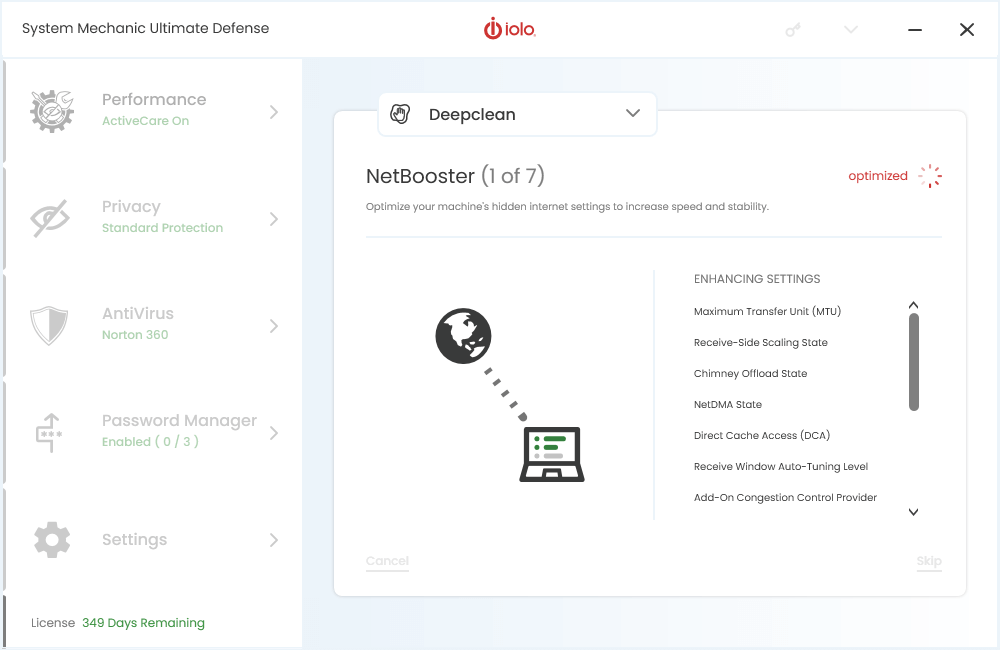
Improving Internet Performance Without Changing Your Hardware
Your internet connection speed isn’t determined by your provider alone. While your router and network hardware play an important role, Windows internet settings can also limit how efficiently your system uses the available bandwidth. Tweaking these settings can help improve responsiveness, downloads, and overall connection stability — even if you’re working with existing equipment.
For users who want a simpler way to optimize these settings, NetBooster, a feature of System Mechanic, provides an automated approach. It adjusts network-related configurations to better match your connection and can re-optimize settings if you change providers or network conditions. This makes it easier to improve internet performance without requiring deep technical knowledge.
By combining sensible network hardware choices with properly optimized system settings, you can get more consistent and reliable performance from your internet connection.
